DIY vs. Rental: Why Professional Photo Booths Matter
A DIY photo booth setup can cost anywhere from $100 to $400 in equipment and props, while a professional photo booth rental typically runs $600 to $1,200 for a standard event. The lower upfront cost of DIY often gets offset by unreliable equipment, blurry photos, and no one available to fix problems mid-event. Premier Rentals Co works with hosts who tried the DIY route first and came back once they saw the gap in photo quality, guest experience, and overall reliability.
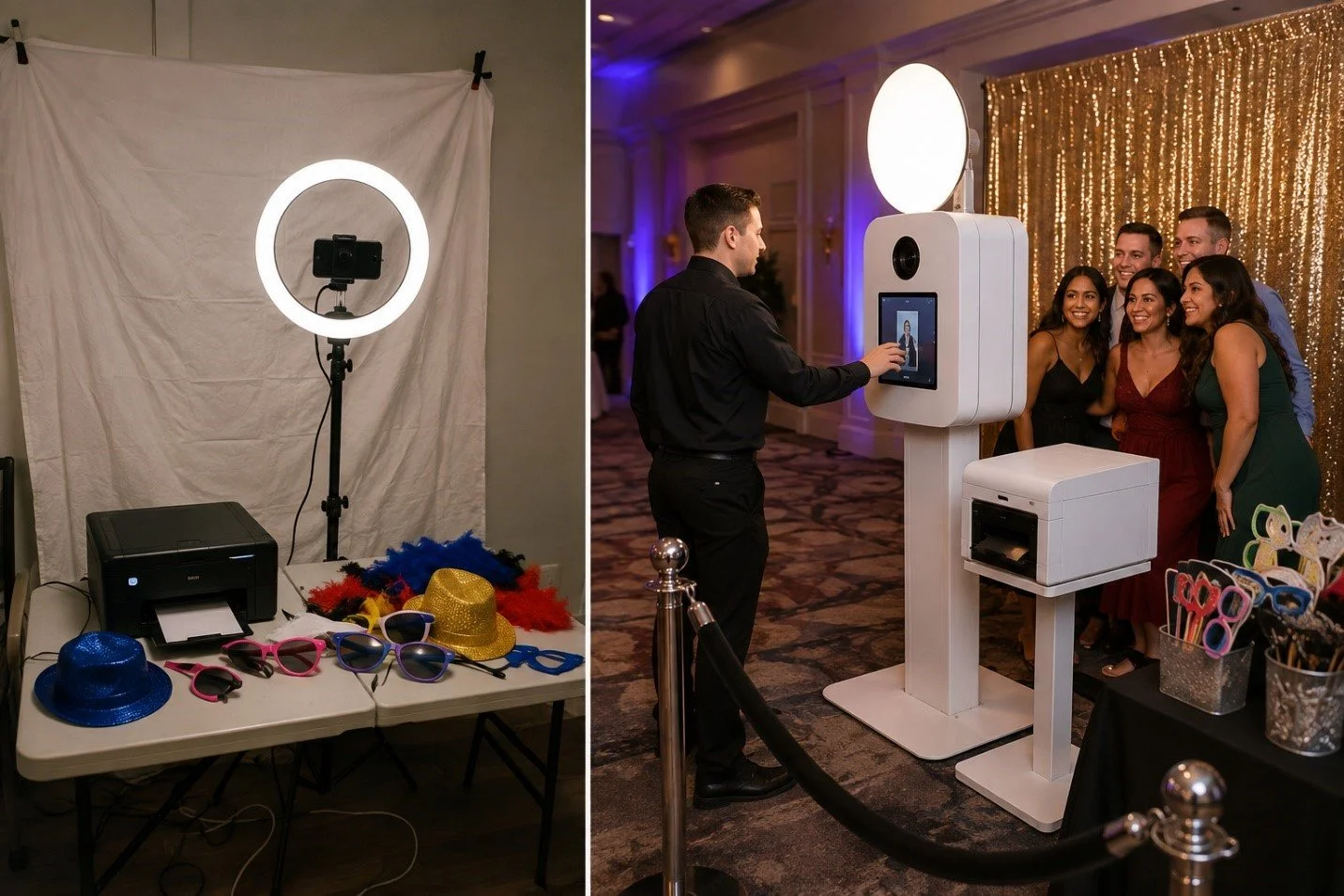
Choosing between a homemade setup and a professional photo booth rental comes down to more than budget. It affects photo quality, guest engagement, and how much a host actually gets to enjoy their own event instead of troubleshooting a jammed printer. This breakdown covers where DIY genuinely works, where it falls short, and what separates a professional booth from a folding table with a ring light.
DIY vs. Rental: Why Professional Photo Booths Matter for Photo Quality
Photo quality is where the difference between DIY and a professional rental shows up first. A DIY setup usually relies on a smartphone camera and a basic ring light, which struggles with mixed indoor lighting and produces inconsistent results from photo to photo. Guests standing near a window get blown-out highlights, while those farther from the light source end up too dark.
Professional booths use DSLR cameras paired with studio-grade lighting calibrated for the specific backdrop and room. This produces sharp, evenly lit photos regardless of where a guest stands in the frame. The difference is especially noticeable in printed photos, where phone camera images often look noticeably softer once enlarged to a standard 4x6 print size.
Print quality itself is another gap that catches DIY hosts off guard. A basic home printer cannot match the speed or consistency of a dye-sublimation printer built for continuous event use. Guests waiting more than a minute or two for a single photo tend to lose interest, which defeats the purpose of having a photo station at all.
Weighing the Real Cost of DIY Versus Professional Setup
The sticker price of a DIY photo booth looks appealing at first glance, but the full cost adds up quickly once every component is accounted for. A tripod, backdrop stand, lighting kit, printer, and props can easily reach $300 to $400 even before factoring in the time spent researching and assembling everything. That cost also does not include a backup plan if any piece of equipment fails mid-event.
Professional rentals bundle equipment, setup, staffing, and troubleshooting into a single flat fee, which removes the guesswork entirely. Hosts comparing pricing across different booth styles can get a clearer picture from this affordable photo booth rental guide, which breaks down realistic cost ranges across New Jersey. In most cases, the price gap between DIY and a basic professional rental is smaller than people expect once every DIY expense is added up.
Common Failure Points and Equipment Entities That Separate DIY From Professional Booths
The most common DIY failure points are printer jams, dead batteries, and lighting that looks fine on a phone screen but photographs poorly. None of these problems are catastrophic on their own, but without anyone dedicated to monitoring the setup, they can go unnoticed for a large portion of the event. A jammed printer at the two-hour mark of a wedding reception, for example, can mean an hour or more of guests missing out entirely.
Professional booths remove this risk through redundant equipment and an on-site attendant trained to handle issues in real time. Key components like the DSLR camera, dye-sub printer, LED ring light, and touchscreen interface are tested before every event, not assembled fresh each time by a host juggling other party responsibilities. This kind of consistency is one of the biggest reasons professional booths remain popular for high-stakes events like weddings, corporate parties, and milestone celebrations.
Guest Experience: Where DIY Setups Struggle Most
Guest experience is often the deciding factor that pushes hosts toward a professional rental after a rough DIY attempt. A self-serve DIY station relies on guests figuring out the camera timer, lighting, and printer on their own, which slows down the line and leads to confused or awkward photos. Without a clear system, groups often crowd around the setup unsure of how to actually use it.
A professional booth includes a touchscreen interface designed for quick, intuitive use, along with an attendant who keeps the line moving and helps guests get the best shot. This matters most at larger events where dozens of guests want to use the booth within a short window. Reviewing the setup differences covered in this guide to selecting a photo booth rental service helps hosts understand what a well-run booth experience actually looks like compared to a self-managed table.
Instant sharing is another area where DIY setups typically fall behind. Professional booths usually include text, email, or QR code sharing built directly into the software, so guests leave with a copy of their photo before they even walk away. DIY setups often require guests to manually request photos later, which means many never actually receive them.
When DIY Might Actually Make Sense?
DIY setups are not without their place, particularly for very small, casual gatherings where budget is the primary constraint. A backyard birthday party with a handful of close friends does not carry the same stakes as a wedding reception with 150 guests. In these lower-pressure settings, a simple phone-based setup with a basic backdrop can still add a fun element without a major investment.
The calculation changes quickly once guest count, event importance, or venue size increases. A milestone celebration, such as those covered in this milestone birthday photo booth guide, typically justifies the added cost of a professional setup given how central photos become to the day. Corporate events and formal parties almost always benefit from professional equipment, since brand image and guest impressions are directly tied to the quality of the experience.
Venue logistics also factor into the decision. Larger event spaces or venues with tricky access, similar to those discussed in this Hoboken photo booth rental guide, often require equipment and setup expertise that goes beyond a simple DIY station. Professional vendors know how to work within tight loading docks, uneven floor plans, and lighting conditions that a first-time host might not anticipate.
Backdrop and Style Considerations
Backdrop choice affects DIY and professional setups differently, since professional vendors typically offer a wider range of pre-built options ready for immediate use. DIY hosts are often limited to whatever fabric or paper backdrop they can source and hang themselves, which can look uneven or wrinkled without proper equipment. A poorly hung backdrop is one of the most common giveaways in DIY photo booth photos.
Comparing booth styles side by side highlights just how much variation exists in the professional space. This retro versus classic photo booth comparison shows the range of options available, from vintage enclosed booths to modern open-air setups, none of which are realistic to replicate with a DIY approach. Hosts planning a themed event, such as those detailed in this South Jersey photo booth guide, often find that professional backdrop options align more closely with their vision than anything achievable with a home setup.
Making the Right Call for Your Event
The decision between DIY and professional ultimately comes down to how much the photos matter to the event itself. Casual, low-stakes gatherings can get away with a simple DIY station without much downside. Weddings, milestone birthdays, corporate events, and any occasion where guests will remember the photos years later almost always benefit from the reliability and quality a professional setup provides.
Cost alone should not be the only factor in that decision, since the true cost of DIY often includes hidden time, equipment failures, and lower-quality results. A clear-eyed comparison of both options, weighed against the event's importance, usually points hosts toward the choice that actually protects the experience they are trying to create.
Whether you are planning an intimate gathering or a large celebration, professional equipment and an experienced attendant make a measurable difference in the final results. Reach out to Premier Rentals Co to compare booth options and find the right setup for your next event.
Frequently Asked Questions
Is a DIY photo booth cheaper than renting one?
The upfront cost of DIY equipment is often lower, but once printer quality, lighting, backup equipment, and time are factored in, the total cost gap between DIY and a basic professional rental is usually smaller than expected.
What equipment does a professional photo booth use that DIY setups typically lack?
Professional booths use DSLR cameras, dye-sublimation printers, calibrated studio lighting, and touchscreen interfaces, all of which are difficult and expensive to replicate with a DIY setup.
Is DIY a good option for a small party?
DIY can work well for small, casual gatherings where budget is the main priority, but it becomes less practical as guest count and event importance increase.
Why do professional photo booths include an attendant? '
An on-site attendant keeps the line moving, troubleshoots equipment issues in real time, and helps guests get the best possible photo, none of which a self-serve DIY station can offer.
Do professional photo booths share photos instantly as a DIY setup can?
Most professional booths include built-in text, email, or QR code sharing so guests receive their photo immediately, while DIY setups often require manual sharing after the event.